Praia is the political and cultural center of Cape Verde, set along the southern coast of Santiago Island. Unlike resort-focused destinations elsewhere in the archipelago, Praia feels practical, lived-in, and deeply local. Government offices, historic districts, beaches, and busy markets exist side by side, shaping a city where everyday routines are as important as landmarks. For travelers using a Praia travel guide, the goal is not to rush between sights but to understand how the city works and how people move through it.
Exploring things to see in Praia means paying attention to contrasts. Colonial-era streets sit above modern neighborhoods. Calm beaches edge lively markets. Music drifts through public spaces rather than formal venues. This guide focuses on the Praia attractions that best reveal the city’s character, balancing history, coastline, and daily life.
Historic Core And Civic Spaces
Praia’s elevated historic center offers the clearest starting point for understanding the city’s past and present role as a capital.
Plateau (Cidade Alta)
The Plateau, also known as Cidade Alta, is Praia’s historic and administrative heart. Built on raised ground overlooking the ocean, the district reflects Portuguese colonial planning, with wide streets, open squares, and civic buildings arranged for visibility and access. Today, it remains active rather than preserved, housing government offices, cafés, museums, and everyday foot traffic.
Walking through the Plateau gives visitors a sense of continuity. Landmarks such as the Presidential Palace and nearby public buildings sit alongside shaded seating areas where locals pause during the day. As one of the key Praia tourist sights, the Plateau shows how history and modern governance continue to share the same space.
Praia City Hall And Main Square
Near the Plateau’s core, the main square by City Hall functions as a social anchor. This is where public events, informal meetings, and daily movement intersect. Spending time here offers insight into how residents interact with civic space, which is often more revealing than visiting formal institutions alone.
Museums And Cultural Context
Praia’s museums are modest in scale but valuable for understanding Cape Verde’s identity and island traditions.
Museu Etnográfico de Praia
The Ethnographic Museum provides essential background on Cape Verdean life, particularly for visitors unfamiliar with the islands’ rural traditions. Exhibits focus on agriculture, fishing, domestic tools, music, and social customs across the archipelago. Though compact, the museum helps place Praia within a wider national context, making it an important stop for anyone interested in places to visit in Praia beyond outdoor scenery.
Markets And Everyday Life
Praia’s markets and neighborhoods reveal the city at its most energetic, offering a direct look at daily commerce and social exchange.
Mercado de Sucupira
Mercado de Sucupira is one of the most vivid Praia attractions and a centerpiece of everyday life. The market is informal, crowded, and constantly in motion, with stalls selling clothing, produce, household goods, and imported items from across West Africa. It is not designed for tourists, which makes it especially revealing.
Walking through the market shows how trade connects Praia to regional networks beyond Cape Verde. For visitors, it offers a sensory experience that contrasts sharply with the calm of the Plateau or nearby beaches.
Achada de Santo António
Achada de Santo António represents Praia’s modern residential side. This district is home to offices, shops, cafés, and apartment buildings where many residents live and work. Exploring the area adds balance to a visit focused on historic and coastal sites, reminding travelers that Praia is first and foremost a functioning city rather than a curated destination.
Beaches And Coastal Views
Praia’s coastline plays a central role in daily life, offering accessible beaches that serve as social spaces as much as recreational ones.
Quebra Canela Beach
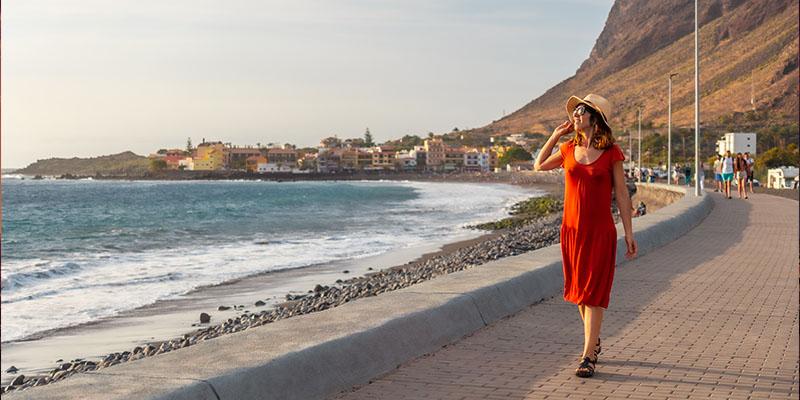
Quebra Canela is Praia’s most popular urban beach and one of the easiest things to see in Praia without leaving the city center. Cafés and small restaurants line the shore, and the beach attracts a steady mix of locals and visitors throughout the day. Swimming, walking, and sunset views make it a relaxed stop that fits naturally into a city itinerary.
Prainha Beach
Prainha offers a quieter alternative just below the Plateau. Its sheltered setting makes it suitable for swimming, and it is often less crowded than Quebra Canela. The visual contrast between the historic district above and the small beach below creates one of Praia’s most distinctive cityscapes.
Viewpoints And City Perspectives
Seeing Praia from above helps visitors understand its geography and relationship with the sea.
Diogo Gomes Monument And Nearby Viewpoints
Viewpoints around the Diogo Gomes Monument provide wide views over the port, coastline, and surrounding neighborhoods. These elevated spots reveal how the city spreads across hills and shoreline, reinforcing Praia’s identity as a coastal capital shaped by trade and movement. As Praia tourist sights, these viewpoints are especially rewarding for photography and orientation.
Music And Informal Cultural Spaces
Music is woven into Praia’s daily life rather than confined to major venues. Small cultural centers, bars, and spontaneous performances showcase traditional styles such as morna and funaná. These experiences often emerge unexpectedly, reflecting how culture functions as part of community life rather than staged entertainment.
For travelers using a Praia travel guide, remaining open to these moments can be more rewarding than seeking scheduled performances alone.
Day Trips Beyond The City
Praia also works well as a base for exploring Santiago Island. Short trips from the capital lead to mountain interiors, rural villages, and historic coastal settlements. These excursions highlight landscapes and lifestyles that differ sharply from the urban environment, adding depth to a stay focused on places to visit in Praia itself.
Final Thoughts
Praia is a city that reveals itself gradually. Its appeal lies less in iconic landmarks and more in everyday rhythms, public spaces, and coastal views shaped by history and routine. From the Plateau’s civic streets to lively markets and accessible beaches, the Praia attractions outlined here offer a grounded introduction to Cape Verde’s capital.
For visitors willing to slow down, observe, and engage with local life, things to see in Praia become moments of connection rather than checklist stops. Praia may not compete with resort destinations for polish, but it stands out for authenticity, cultural depth, and a strong sense of place that stays with you long after you leave.